How to Choose the Right Box Taping Machine for Your Business Needs?
Choosing the right box taping machine can significantly impact operational efficiency. According to the 2022 Packaging Machinery Market report, the demand for automated taping systems has increased by 15% in the past year alone. This trend reflects businesses' desire to optimize packaging processes to reduce labor costs and enhance productivity.
Industry expert John Smith emphasizes, “Selecting the correct box taping machine requires understanding your unique packaging needs and production volume.” This statement highlights the complexity involved in making an informed decision. Every business has different requirements, which can complicate the selection process.
Moreover, many companies make the mistake of underestimating the importance of this equipment. The wrong choice can lead to inefficiencies and increased operational costs. Therefore, businesses must critically assess their needs and consider long-term implications before investing. A well-chosen box taping machine can transform packaging lines and pave the way for growth.
Understanding the Different Types of Box Taping Machines Available
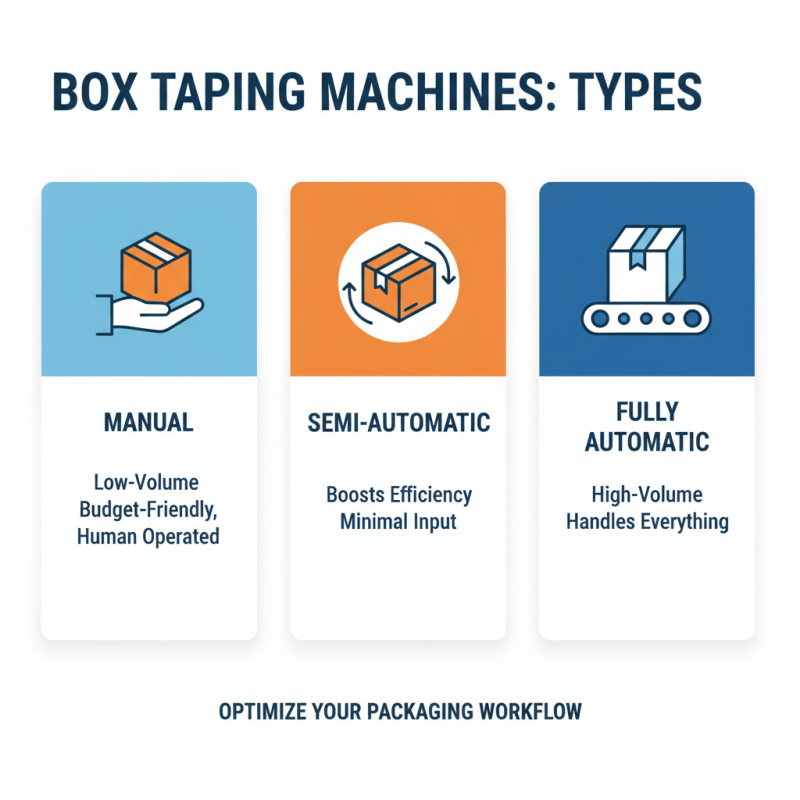
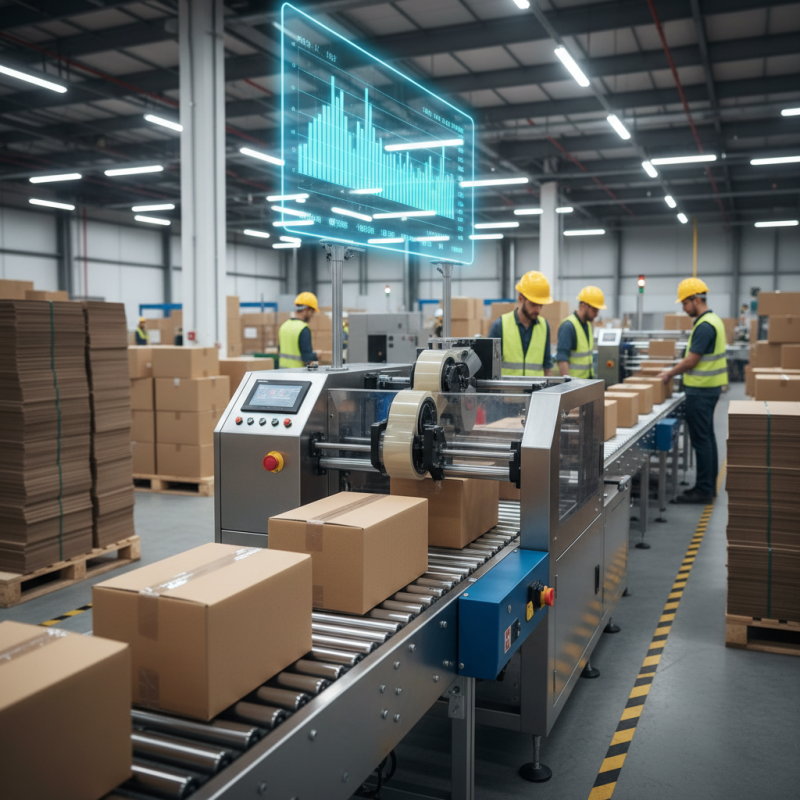
When selecting a box taping machine, understanding the different types can greatly impact your workflow. There are manual, semi-automatic, and fully automatic machines. Manual machines require human operation but are ideal for low-volume needs. They are also budget-friendly. Semi-automatic machines boost efficiency, allowing workers to tape boxes with minimal input. Fully automatic tapers handle everything. They are perfect for high-volume businesses.
Tips: Ensure your machine can accommodate your box sizes. Measure your typical boxes before making a decision. Consider your workspace. Some machines may require more room, which can be a challenge in tight environments.
Different machines have varying tape widths. This can affect sealing quality. Wider tape may offer better adherence. However, it may also increase costs. Evaluate your specific packaging needs and the materials used. Reflect on your production speed. Choosing a machine that matches your pace is crucial. A mismatch can lead to delays or excess downtime.
Evaluating Production Speed Requirements for Taping Machines
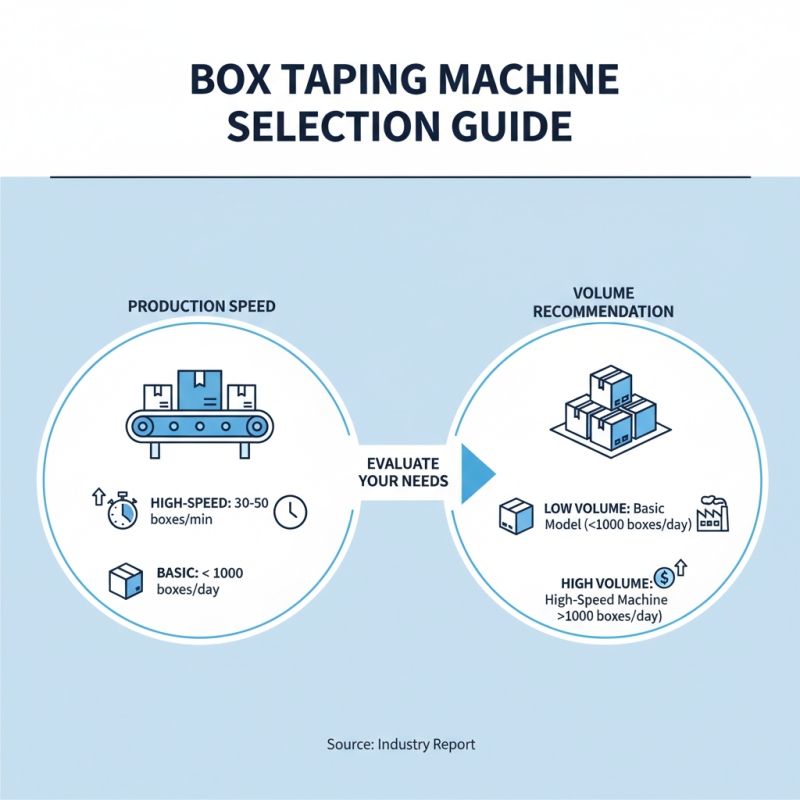
When choosing a box taping machine, it's essential to evaluate your production speed requirements. A recent industry report indicates that high-speed machines can achieve around 30 to 50 boxes per minute, significantly boosting efficiency. If your operation processes fewer than 1,000 boxes daily, a basic model might suffice. However, for larger volumes, investing in a high-speed machine can yield better returns.
Consider your current workflow. Are there bottlenecks or delays in your packing line? Assessing these gaps can help you make informed decisions. Remember, a slower machine can hinder overall productivity. If your business demands fluctuate, opt for machines with adjustable settings. This flexibility allows you to adapt quickly to changing production needs.
**Tip:** Maintain a regular check on the machine’s calibration. Improper settings can derail production speed, affecting profitability.
Ultimately, investing in the right machine is crucial. Determine your volume needs and calculate the expected output. Balancing cost with speed is vital. Companies often regret underestimating their needs, leading to inefficiencies down the line. Make sure to project future growth to avoid premature upgrades. Investing in future-proof technology pays off.
Assessing Tape Compatibility: Material and Size Considerations
When selecting a box taping machine, tape compatibility is crucial. You need to consider both the material and size of the tape. Different tapes have unique adhesive qualities. Some work best with cardboard, while others may not adhere well. Test a few options before committing. This can save time and frustration later.
Tape width is another essential factor. Most machines handle standard widths, like 2 inches or 3 inches. But, if your application requires specific sizes, make sure your machine can accommodate them. A mismatch here can lead to wasted tape and poor sealing.
Experiment with various tape materials like PVC, polypropylene, or paper. Each has strengths and weaknesses. For example, some might tear easily, while others may be too rigid. Pay attention to your packing environment as well. Is it humid or dry? This can affect tape performance. Document your findings. It will help refine your choices over time.
Choosing the Right Box Taping Machine: Tape Compatibility Analysis
Calculating the Total Cost of Ownership for Box Taping Machines
When evaluating the total cost of ownership for box taping machines, it's crucial to consider more than just the purchase price. Maintenance expenses can significantly impact your budget over time. Frequent parts replacement or repairs can add up. Assess the machine's reliability; a low-cost option might end up costing more.
Additionally, energy consumption plays a role in long-term expenses. Some machines may be less energy-efficient, leading to higher utility bills. It's worth analyzing power usage and its impact on your overall costs. Don't overlook the workforce aspect either. A user-friendly machine can reduce training time, resulting in savings.
Lastly, consider the machine's functionality. A versatile model might accommodate various packaging sizes, providing flexibility. However, a complex system can become challenging to operate, leading to inefficiencies. Balancing cost with actual need is essential for informed decisions.
How to Choose the Right Box Taping Machine for Your Business Needs? - Calculating the Total Cost of Ownership for Box Taping Machines
| Feature |
Description |
Cost (USD) |
Maintenance Cost (Annual) |
Lifespan (Years) |
Total Cost of Ownership (TCO) |
| Semi-Automatic Taping Machine |
Ideal for small to medium operations, user-friendly. |
1,500 |
200 |
7 |
1,900 |
| Fully Automatic Taping Machine |
Best for high-volume production, minimal manual intervention required. |
3,500 |
300 |
10 |
4,800 |
| Random Case Sealer |
Versatile for different box sizes, adjusts automatically. |
2,800 |
250 |
8 |
3,650 |
| Pressure Sensitive Taping Machine |
Uses adhesive tape, easy to operate, ideal for various applications. |
1,200 |
150 |
5 |
1,650 |
| String Taping Machine |
Specifically for heavier boxes, ensures secure sealing. |
2,000 |
220 |
6 |
2,320 |
Determining the Required Space and Layout for Machine Installation
When selecting a box taping machine, space and layout are critical factors. First, measure your available floor space. The machine needs adequate room for operation and maintenance.
Consider the dimensions of the machine itself, but also account for space to move around it. Having a cramped setup can lead to inefficiencies and safety concerns.
Next, think about the workflow. Analyze how boxes will enter and exit the machine. Will they come from an assembly line? Will operators need room to load or unload the tape? Placing the machine too close to walls or other equipment can create bottlenecks. Additionally, consider the height of the machine. Taller machines may require more vertical space than anticipated.
Reflect on your current needs and future plans. Can this machine adapt to changes in volume or box sizes? A rigid layout may limit your options later. It's vital to keep some flexibility in your design. Sometimes, simplifying your layout can lead to better efficiency. Careful planning will help you avoid costly adjustments down the line.